Whatsapp
In modern industrial production lines, material contamination is one of the most persistent challenges affecting product quality, equipment lifespan, and operational efficiency. An Automatic Magnetic Separator plays a crucial role in removing ferrous contaminants from raw materials and processed goods across mining, food processing, recycling, ceramics, chemicals, and many other industries. This article explores how automatic magnetic separation technology works, why it is essential in high-efficiency production systems, and how businesses can benefit from integrating it into their operations. It also provides a deep analysis of structure, working principles, applications, maintenance considerations, and selection guidance to help decision-makers make informed choices.
This article is structured to provide a complete understanding of automatic magnetic separation systems, starting from basic definitions and gradually moving toward advanced technical insights and real-world industrial applications. It also addresses common operational problems, selection criteria, and long-term maintenance strategies to maximize efficiency and ROI.
Industrial production systems today are highly dependent on material purity. Even microscopic ferrous particles can damage machinery, compromise product quality, and lead to costly downtime. In sectors such as mining, food processing, and chemical manufacturing, contamination control is not optional—it is a necessity.
The introduction of the Automatic Magnetic Separator has significantly improved how industries handle contamination. Unlike manual or semi-automatic systems, these advanced machines operate continuously, removing ferrous impurities without interrupting production flow. This ensures higher productivity, safer operations, and consistent product quality.
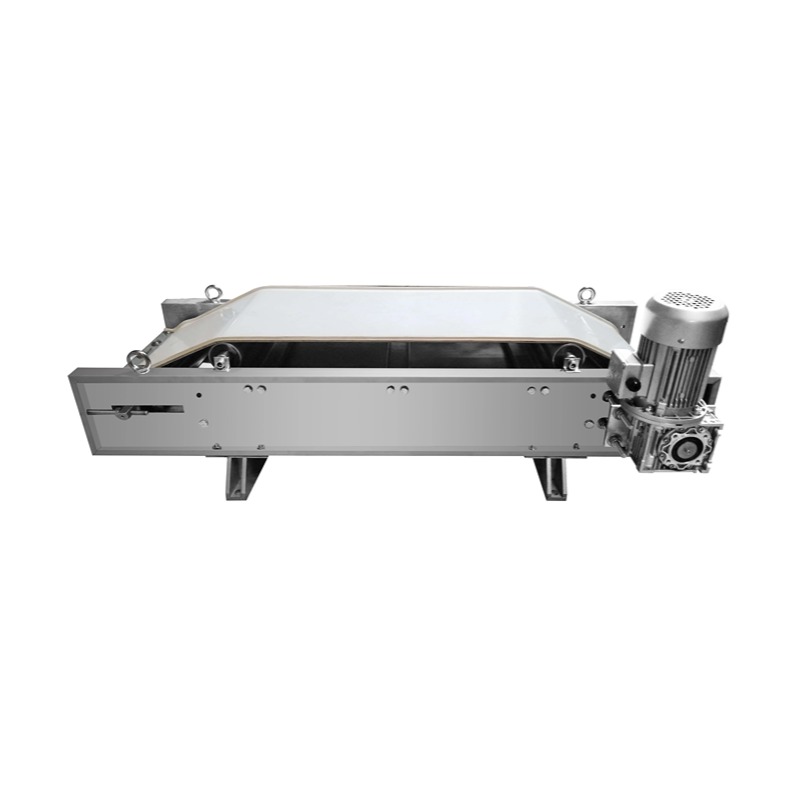
An Automatic Magnetic Separator is an industrial device designed to continuously remove ferromagnetic particles from bulk materials using magnetic force combined with automated cleaning systems. It is widely used in conveyor systems, pipelines, and processing lines where uninterrupted material flow is essential.
Unlike traditional magnetic separators that require manual cleaning, automatic versions use self-cleaning mechanisms such as rotating belts, scrapers, or pneumatic systems. This makes them ideal for large-scale and continuous operations.
The working principle of an Automatic Magnetic Separator is based on magnetic attraction and controlled material flow. As raw material passes through or over the magnetic field, ferrous particles are captured and separated from non-magnetic materials.
Once the magnetic surface accumulates a sufficient amount of metal contaminants, the automatic cleaning system activates. This process removes collected particles without stopping production, ensuring continuous operation.
Understanding the internal structure of an Automatic Magnetic Separator helps in evaluating its efficiency and durability.
Automatic magnetic separators are widely used across multiple industries due to their adaptability and efficiency.
The adoption of Automatic Magnetic Separators offers significant advantages for industrial operations.
These benefits make the system a long-term investment rather than just an operational upgrade.
Despite their advantages, industries often face challenges when integrating magnetic separation systems.
Addressing these challenges requires proper planning, expert consultation, and regular system evaluation.
Selecting the right Automatic Magnetic Separator depends on multiple operational factors.
A well-matched system ensures optimal performance and long-term efficiency.
Regular maintenance is essential to ensure consistent performance of magnetic separation systems.
Proper maintenance significantly extends equipment lifespan and ensures stable production quality.
| Feature | Manual Separator | Semi-Automatic Separator | Automatic Magnetic Separator |
|---|---|---|---|
| Operation Mode | Manual | Partially automated | Fully automated |
| Downtime | High | Moderate | Minimal |
| Efficiency | Low | Medium | High |
| Labor Requirement | High | Medium | Low |
| Consistency | Unstable | Moderate | Highly stable |
Q1: What materials can an Automatic Magnetic Separator process?
It can handle ores, grains, powders, plastics, chemicals, and recycled materials containing ferrous impurities.
Q2: Does it require frequent manual intervention?
No, the system is designed for continuous automatic operation with minimal manual input.
Q3: How often should maintenance be performed?
Routine inspection is recommended monthly, with full servicing depending on workload intensity.
Q4: Can it be integrated into existing production lines?
Yes, most models are designed for easy integration into conveyor or pipeline systems.
Q5: What is the main advantage over traditional separators?
The key advantage is uninterrupted automatic cleaning, which ensures continuous production efficiency.
The Automatic Magnetic Separator has become an essential component in modern industrial processing systems. By efficiently removing ferrous contaminants without interrupting production, it enhances product quality, protects machinery, and improves operational efficiency across various industries. Its automation capabilities make it a preferred choice for businesses seeking long-term reliability and performance stability.
For industries aiming to upgrade their material purification systems and improve production efficiency, selecting a high-quality magnetic separation solution is a strategic decision that delivers long-term value.
Force Magnetic Solution Co., Ltd specializes in advanced magnetic separation technologies designed to meet diverse industrial requirements. If you are looking for customized solutions or technical support, feel free to contact us for more information and professional assistance.
-